Context:
Fujitsu's Digital CxO event brought together senior leaders to discuss digital transformation.
My role: UI designer and low-code platform builder.
Deliverables: UI design, no-code site build.
Timeline: ~3 weeks from brief to launch, with the event starting in two weeks.
The problem:
Event sites have two fundamentally different jobs: before the event, they need to inform and drive registration; after the event, they need to serve as a content library. Most event sites handle one phase well and awkwardly retrofit the other. The tension here was compounded by an extremely tight turnaround — the event was starting in a couple of weeks, and the site needed to serve both phases from a single design.
Fujitsu's Digital CxO event brought together senior leaders to discuss digital transformation.
My role: UI designer and low-code platform builder.
Deliverables: UI design, no-code site build.
Timeline: ~3 weeks from brief to launch, with the event starting in two weeks.
The problem:
Event sites have two fundamentally different jobs: before the event, they need to inform and drive registration; after the event, they need to serve as a content library. Most event sites handle one phase well and awkwardly retrofit the other. The tension here was compounded by an extremely tight turnaround — the event was starting in a couple of weeks, and the site needed to serve both phases from a single design.


Key decisions:
Decision 1: Design for both phases from the start
What we considered: Building a pre-event site and redesigning post-event vs. designing a single structure that could transition.
Why we chose this: With a tight timeline, we couldn't afford a post-event rebuild. Designing for both phases upfront meant the site could transition from information hub to content library without redevelopment.
What we accepted: The pre-event experience is slightly less promotional than it could be, because it also needs to work as a content archive.
Decision 2: Low-code platform over custom build
What we considered: A custom-built site vs. a low-code platform approach.
Why we chose this: The timeline made custom development unrealistic. A low-code platform let me design and build simultaneously, compressing the production cycle.
What we accepted: Less fine-grained design control than a custom build, but the trade-off was delivering at all.
Decision 1: Design for both phases from the start
What we considered: Building a pre-event site and redesigning post-event vs. designing a single structure that could transition.
Why we chose this: With a tight timeline, we couldn't afford a post-event rebuild. Designing for both phases upfront meant the site could transition from information hub to content library without redevelopment.
What we accepted: The pre-event experience is slightly less promotional than it could be, because it also needs to work as a content archive.
Decision 2: Low-code platform over custom build
What we considered: A custom-built site vs. a low-code platform approach.
Why we chose this: The timeline made custom development unrealistic. A low-code platform let me design and build simultaneously, compressing the production cycle.
What we accepted: Less fine-grained design control than a custom build, but the trade-off was delivering at all.


Solution:
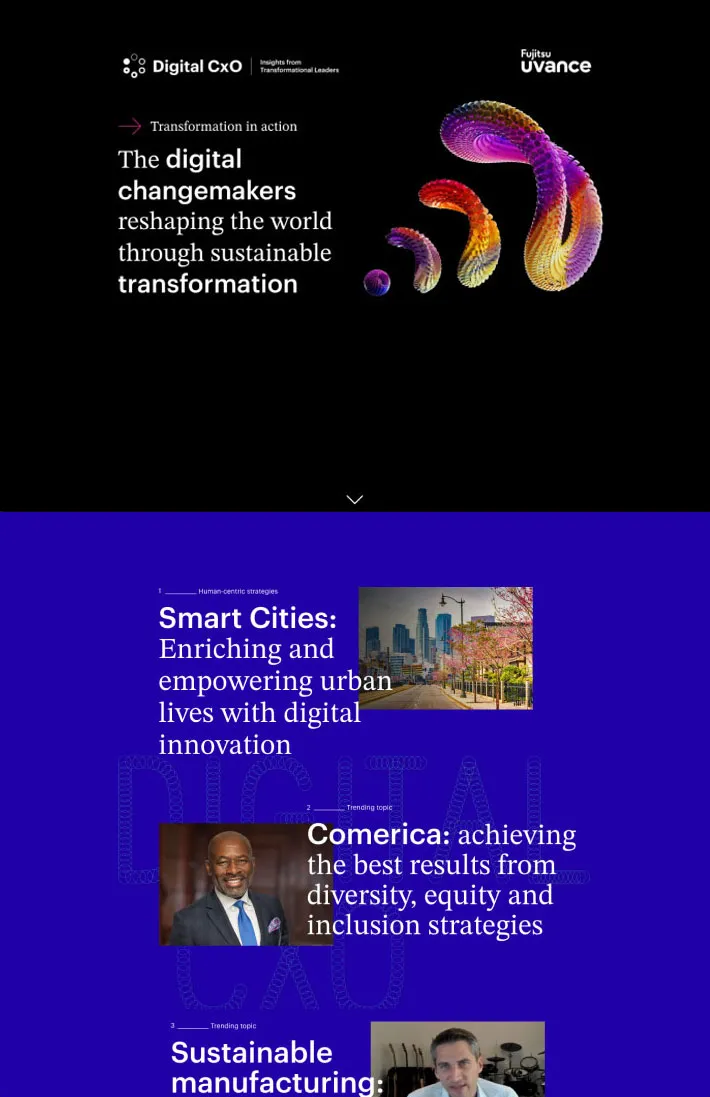
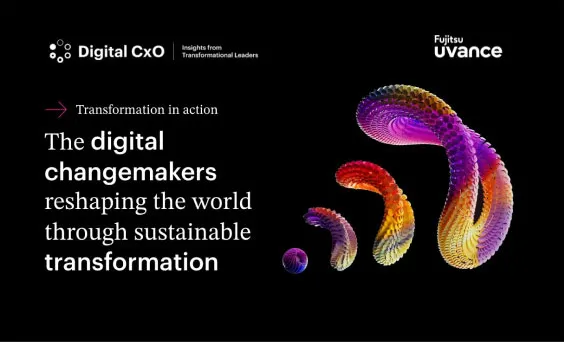
I designed pages and visual structure that worked across both pre-event and post-event uses within Fujitsu's enterprise brand constraints. Then I built the site on a low-code platform to compress the production timeline. The site transitioned from agenda and registration hub to content library after the event without redevelopment.
Outcome:
Site launched alongside the event after a rapid production cycle. The tight turnaround proved the low-code approach could deliver enterprise-quality work under pressure.
Reflection:
The low-code platform was the right call for the timeline, but it forced compromises on the visual design I wasn't fully happy with. If I had more time, I'd push the platform harder or advocate for a custom build, but given the constraints, shipping on time was the right priority.
I designed pages and visual structure that worked across both pre-event and post-event uses within Fujitsu's enterprise brand constraints. Then I built the site on a low-code platform to compress the production timeline. The site transitioned from agenda and registration hub to content library after the event without redevelopment.
Outcome:
Site launched alongside the event after a rapid production cycle. The tight turnaround proved the low-code approach could deliver enterprise-quality work under pressure.
Reflection:
The low-code platform was the right call for the timeline, but it forced compromises on the visual design I wasn't fully happy with. If I had more time, I'd push the platform harder or advocate for a custom build, but given the constraints, shipping on time was the right priority.